Safe, gentle removal when a tooth can't be saved.
Clinically reviewed by Dr. Ananya, MDS · Reg. 30262 A · Updated September 29, 2026
Starting from
₹1,200
*Indicative — confirmed at consultation
Typical time
20–40 min
Category
Surgical
Delivered by
MDS specialist
Pricing
Written, up front
“Sometimes the healthiest thing for your mouth is to remove a tooth that can't be saved — done gently, with a clear plan for what comes next.”
— Dr. Ananya, White Oak Dental Studio
What it's for
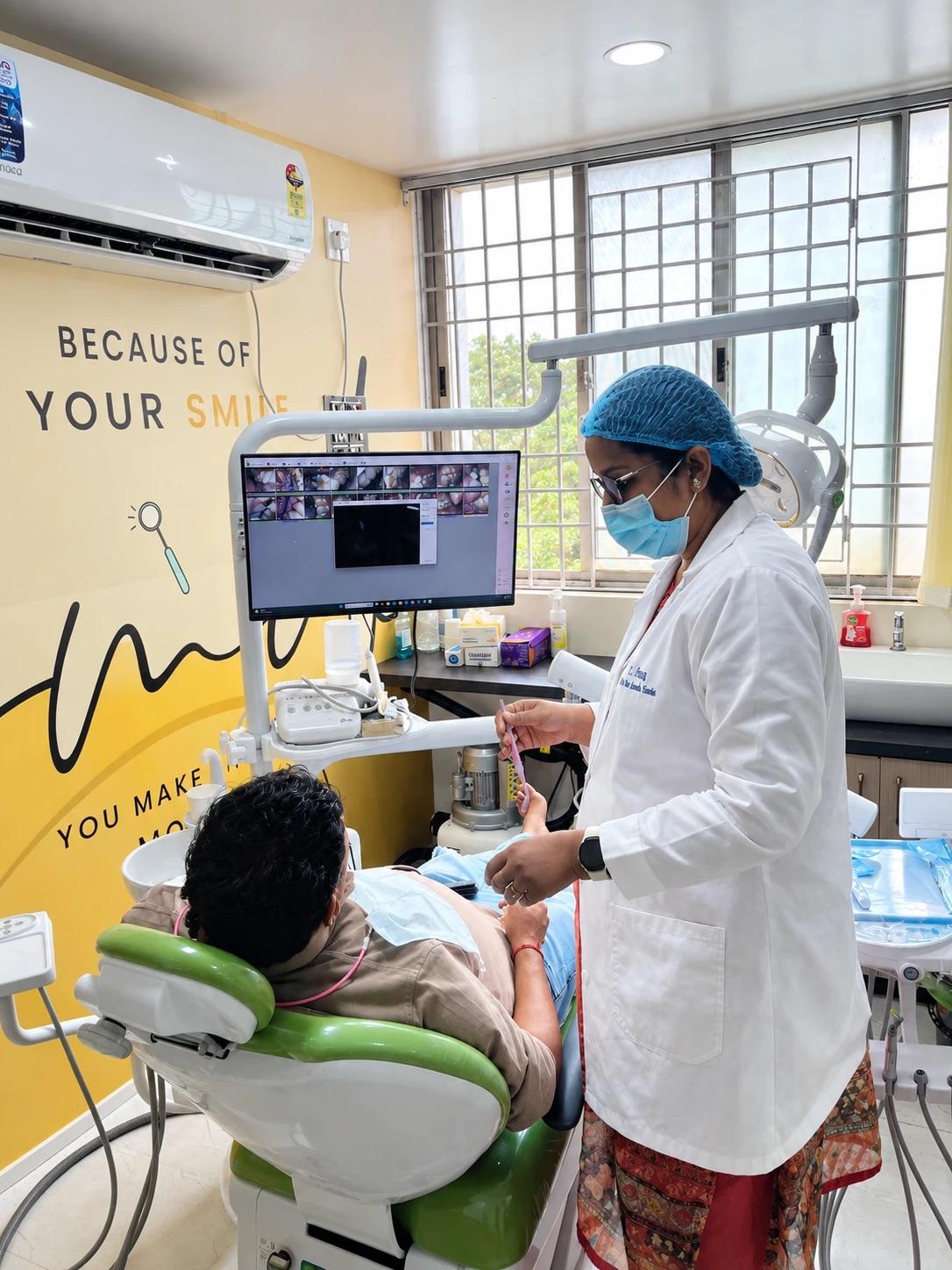
Sometimes a tooth is too damaged by decay, infection or crowding to save — and removing it is the healthiest option. We assess every extraction with a digital X-ray first, so there are no surprises once we begin. The procedure itself is done under local anaesthesia with a gentle, precise technique, and you'll leave with a written aftercare plan and clear guidance on replacement options, if you need one.
Who it's for
Why do this
When a tooth truly can't be saved, removing it ends the cycle of pain and repeated infection for good.
A badly infected tooth left in place can put neighbouring teeth and bone at risk — extraction stops that early.
Local anaesthesia means you feel pressure, not pain, throughout the procedure.
You leave knowing your options — implant, bridge, or leaving the space — rather than facing the gap unplanned.
What's included
Procedure guide
Confirms the exact position of the tooth and root before any decision or procedure.
The area is fully numbed so the extraction itself is pain-free.
A precise, minimally traumatic technique removes the tooth with as little disruption to surrounding bone as possible.
You leave with specific instructions to protect the healing socket over the following days.
A check at 7–10 days confirms the socket is healing well and discusses replacement options if needed.
How it compares
Extraction or root canal — when a tooth is in trouble, here's how the two paths compare.
Best for: a tooth that's infected but structurally savable
Best for: a tooth too damaged, cracked or infected to save
Before & after
Eat a light meal beforehand; avoid blood thinners if advised by your doctor.
Follow-up at 7–10 days to confirm healing.
Long-term care
Protects the healing socket while the initial clot forms and stabilises.
Both can dislodge the healing blood clot and cause a painful dry socket.
Confirms healing is on track and is the right time to discuss replacing the tooth, if needed.
Waiting too long lets neighbouring teeth shift into the gap, making future replacement more complex.
What it costs
From ₹1,200per tooth — local anaesthesia included
Your exact cost depends on your case — get a realistic range in under 90 seconds, then the full cost upfront at your consultation.
Please note: Prices are indicative only. Your actual cost depends on your teeth and the treatment you need, and is confirmed only after an in-person consultation and examination by your dentist.
Common questions
No — local anaesthesia numbs the area completely; you'll feel pressure, not pain. Mild soreness afterwards is normal and manageable with regular painkillers.
Why White Oak
Every treatment is planned and overseen by Dr. Ananya — MDS Prosthodontist and former RIMS consultant.
You see the full treatment plan and every rupee before anything begins. No surprises.
Autoclave-sterilised instruments and clinical-grade infection control, every single visit.
Explore more
Dr. Ananya will assess your case, explain every step, and give you a clear upfront plan — no surprises.
