Treating advanced gum disease and receding gums.
Clinically reviewed by Dr. Ananya, MDS · Reg. 30262 A · Updated September 29, 2026
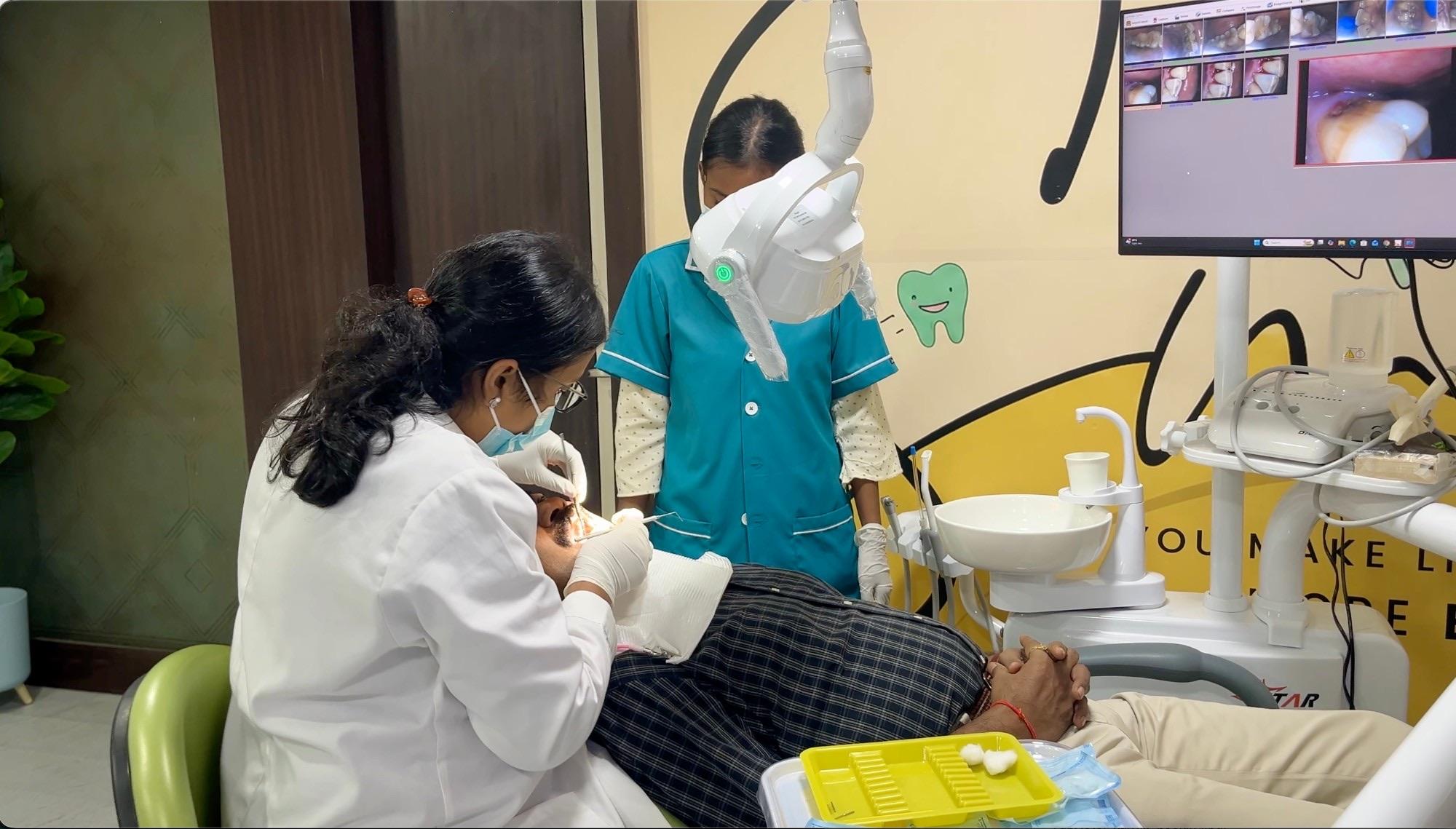
Typical time
45–90 min
Category
Surgical
Delivered by
MDS specialist
Pricing
Written, up front
“Healthy gums are the foundation everything else sits on. When they need surgery, the goal is simple — stop the disease and protect the teeth it's threatening.”
— Dr. Ananya, White Oak Dental Studio
What it's for
When gum disease has progressed beyond what scaling alone can fix, surgery stops it from advancing further and protects the teeth it's threatening. Depending on what your gums need, that might mean pocket-reduction (flap) surgery to clean deep beneath the gumline, or grafting to rebuild gum tissue that has receded. Every plan starts with a full periodontal exam and an upfront treatment plan, and the procedure itself is done under local anaesthesia.
Who it's for
Why do this
Where deep cleaning alone isn't enough, surgery removes disease-causing bacteria trapped beneath the gumline.
Reducing deep pockets removes the environment that leads to bone loss and eventually tooth loss.
Grafting restores gum coverage over exposed roots, reducing sensitivity and improving appearance.
You leave with a structured schedule to protect the results and prevent disease returning.
What's included
Procedure guide
Pocket depths, bleeding and bone levels are measured to confirm how advanced the disease is.
Scaling and root planing beneath the gumline is often tried before surgery is recommended.
Depending on your needs, this may be pocket-reduction (flap) surgery or gum grafting, done under local anaesthesia.
You leave with clear instructions to protect the surgical site through the initial healing period.
Follow-up at 2 weeks, then every 3–6 months, to keep the results stable long-term.
How it compares
Deep cleaning or surgery — the right approach depends on how advanced the gum disease is.
Best for: early-to-moderate gum disease
Best for: advanced disease that deep cleaning alone can't resolve
Before & after
Continue any prescribed antibiotics; avoid smoking before and after the procedure.
Review at 2 weeks, then every 3–6 months as part of gum maintenance.
Long-term care
Gum disease can return without consistent professional cleanings — usually every 3–6 months after surgery.
Consistent home care is what keeps disease-causing bacteria from re-establishing at the gumline.
Smoking significantly slows gum healing and is one of the strongest risk factors for the disease returning.
Early signs of recurrence are far easier to manage than a full relapse.
What it costs
Transparent, upfront pricing
Cost depends on your specific case. You'll get the full itemised costs before anything begins — no surprises.
Common questions
Signs include bleeding gums, persistent bad breath, loose teeth, or gums pulling away from the teeth. A periodontal exam will confirm how advanced it is and whether surgery is needed.
Why White Oak
Every treatment is planned and overseen by Dr. Ananya — MDS Prosthodontist and former RIMS consultant.
You see the full treatment plan and every rupee before anything begins. No surprises.
Autoclave-sterilised instruments and clinical-grade infection control, every single visit.
Explore more
Dr. Ananya will assess your case, explain every step, and give you a clear upfront plan — no surprises.
